By Dr. P. A. Hameed
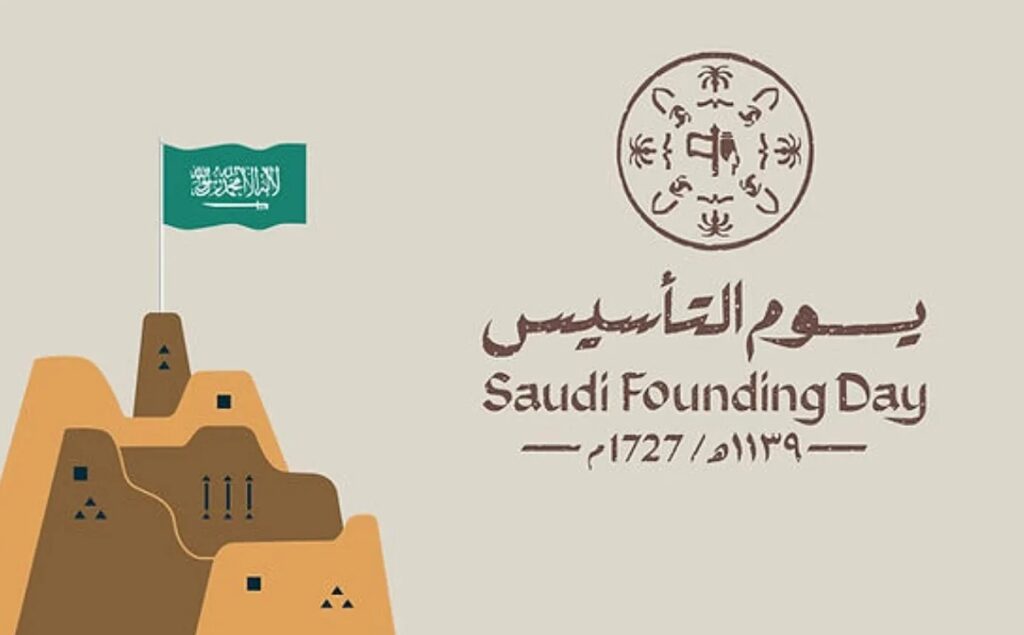
When I began writing about Saudi Founding Day, I felt it’s important to clarify its correct official usage. Many mistakenly refer to it as “Saudi Foundation Day.” However, the accurate and officially adopted term is Saudi Founding Day, because it commemorates the establishment of a state, not merely a structural foundation. In Arabic, it is known as Yaum al-Ta’asees.
The observance was officially declared by King Salman bin Abdulaziz Al Saud under his Royal Decree No. A/371 on January 27, 2022 (24/6/1443H), designating February 22 of each year as a national public holiday. The first celebration took place on the remarkable date 22-02-2022, a symbolic beginning for a commemoration that looks back three centuries.
The Historical Anchor
Founding Day traces its roots to 1727, when Imam Muhammad bin Saud established the First Saudi State in Diriyah. As someone who has lived in the Kingdom and closely observed its development, I see this commemoration as more than a historical reminder. It reshapes public understanding by highlighting that Saudi Arabia’s story did not begin in 1932 with the unification led by King Abdulaziz Al Saud, but extends back to a deeper and older foundation of governance and unity.
This historical perspective strengthens national confidence. It tells citizens and residents alike that the Kingdom’s stability is not recent, it’s rooted in centuries of leadership and resilience.
Heritage in the Age of Transformation
What strikes me most is that as the country moves rapidly towards modernization, it has simultaneously deepened its attachment to its origins. As the Kingdom advances economically, technologically and globally, it simultaneously revives traditional attire, Najdi architectural identity, and the historical significance of Diriyah.
In my observation, this is not symbolic nostalgia or superficial celebration. It’s intentional nation-building. The direction aligns closely with Saudi Vision 2030, where development and cultural preservation are not opposites, but close partners.
On Founding Day, I see families dressed in traditional clothing, schools educating children about their early statehood, and young Saudis expressing pride in a history that spans three centuries. The faster the transformation, the stronger the visible connection to roots.
Confidence for the Future
The distinction between Founding Day and National Day is profound. National Day marks political unification while Founding Day marks the birth of the state itself. This deeper historical anchor adds maturity and depth to national identity.
Personally, witnessing these developments has been inspiring. Saudi Arabia today stands confidently on the global stage while remaining grounded in its traditions. Under the glaring leadership of King Salman and Crown Prince Mohammed bin Salman (MBS), the Kingdom continues redefining progress-not by distancing itself from history, but by building upon it.
Saudi Founding Day represents its continuity. It honors the vision of Imam Muhammad bin Saud, acknowledges the unification achieved by King Abdulaziz, and connects that legacy to a transformative present.
In Saudi Arabia’s journey, modernization is not detached from heritage, but it grows from it. And that is what makes its Founding Day not just a commemoration of the past-but a statement of confidence for the future.