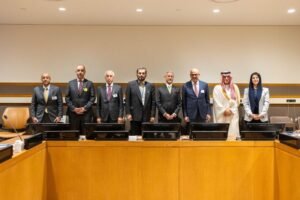
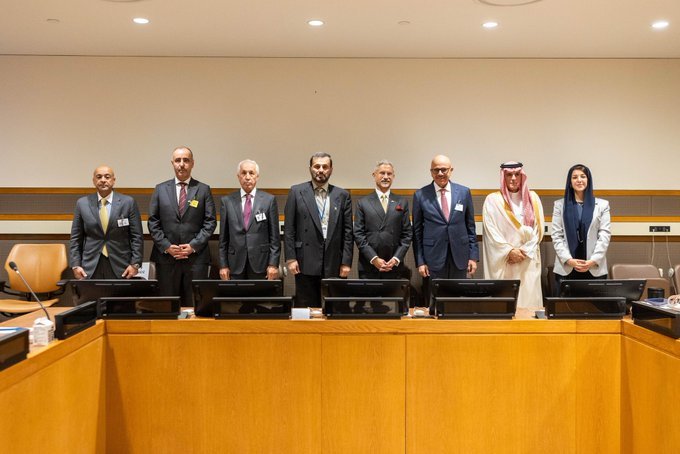
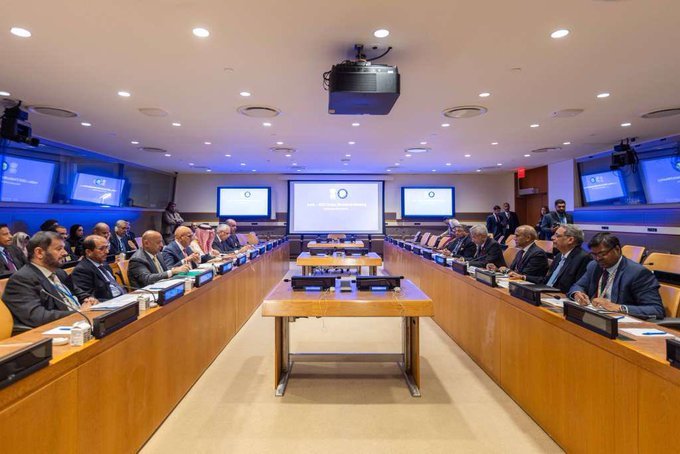
NEW YORK — On the margins of the 81st Session of the United Nations General Assembly, high-level delegations from India and the Gulf Cooperation Council convened on September 25, 2026, for the India-GCC Troika Ministerial Meeting. Led by India’s External Affairs Minister, Dr. S. Jaishankar, alongside an esteemed GCC leadership contingent—including Bahrain Foreign Minister Dr. Abdullatif bin Rashid Al Zayani, GCC Secretary General Jasem Mohamed Albudaiwi, and Saudi Minister of State for Foreign Affairs Adel Al-Jubeir—the deliberations reflected a mutual imperative to deepen institutionalized strategic, economic, and security ties.
Institutionalizing Strategic Dialogue and Economic Expansion
Building upon the foundational principles established during the inaugural India-GCC Joint Ministerial Meeting for Strategic Dialogue in Riyadh in September 2024, the high-level dialogue affirmed the trajectory of bilateral ties. EAM Dr. S. Jaishankar underscored the historical lineage of India-GCC relations, anchored by extensive commercial exchanges, deep-rooted cultural alignment, and an expansive Indian diaspora residing across the Gulf region. Commercial engagement between the two economic blocks reached USD 178.66 billion in Fiscal Year 2025–26, highlighting the robust economic interdependence spanning energy, health, technology, and cross-border investments.
A central outcome of the summit was the institutional review of the India-GCC Joint Action Plan (JAP) 2024–2028. The framework delineates targeted avenues of high-level collaboration across political dialogue, defense and security, trade and investment, maritime connectivity, food security, public health, and technological development. Ministerial representatives expressed satisfaction with the steady implementation of the Joint Action Plan, recognizing its multi-sectoral coverage as indicative of a mature and evolving partnership.
Launch of FTA Negotiations and Supply Chain Resilience
In a pivotal development for regional commerce, leaders formally welcomed the initiation of India-GCC Free Trade Agreement (FTA) negotiations, following the finalization of the Terms of Reference in February 2026. The projected trade accord is anticipated to serve as a catalyst for economic diversification, removing market barriers and optimizing trade flows between South Asia and the Gulf. Delegations noted that the framework would significantly enhance global supply chain resilience while promoting strategic economic integration across both markets.
Addressing supply chain security amid recent geopolitical turbulence in West Asia, External Affairs Minister Dr. Jaishankar expressed gratitude to GCC member states for maintaining uninterrupted exports of vital energy resources and fertilizers despite disruptions to commercial maritime transit routes. Looking toward long-term security, both parties agreed to expand energy cooperation beyond conventional hydrocarbons into renewable infrastructure, biofuels, and green technologies.
Regional Security, Diaspora Welfare, and Multilateral Governance
The ministers engaged in comprehensive exchanges regarding regional and global security architectures. Discussions focused heavily on the situation in West Asia, emphasizing the necessity of safeguarding international maritime traffic through critical waterways, countering transnational terrorism, and promoting regional stability through sustained diplomatic engagement. India reiterated its steadfast commitment to peace and conflict resolution through international law and multilateral diplomacy.
Concurrently, the meeting highlighted the humanitarian and cultural dimensions of the relationship. Indian officials formally acknowledged GCC host nations for ensuring the welfare and security of the Indian diaspora during recent regional crises. Both delegations reaffirmed their intent to deepen socio-cultural engagement through joint initiatives in heritage preservation, literature, cinema, and health disciplines. The summit concluded with a clear commitment to convene the second edition of the India-GCC Joint Ministerial Meeting for Strategic Dialogue in the near future.